Home / Products
There's no single "best" camera — there's the right one for the spot it's going in. Here's what each type actually does, where it works, and where it doesn't. If you'd rather skip the reading, call and we'll spec it for you.
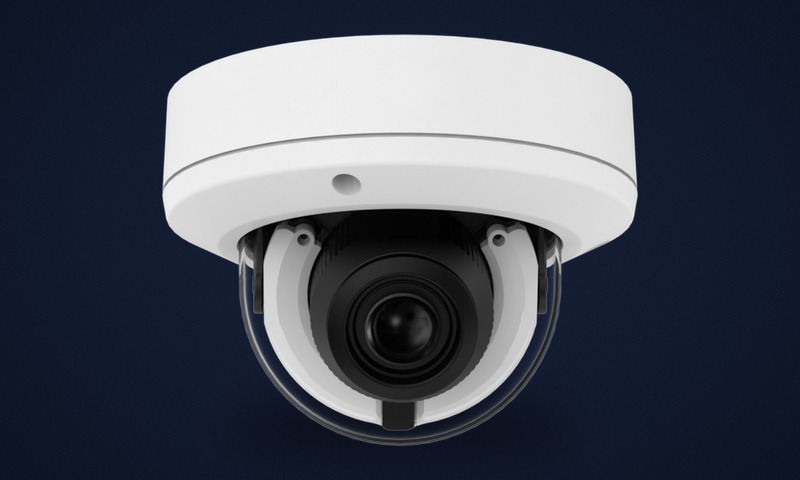
A half-sphere behind a clear plastic bubble, mounted flush to a ceiling or soffit. Because the lens is hidden inside the dome, nobody can tell which way it's pointing — and there's nothing sticking out to grab or knock out of alignment.
Best for: shops, offices, reception areas and corridors — anywhere the public can reach the camera.
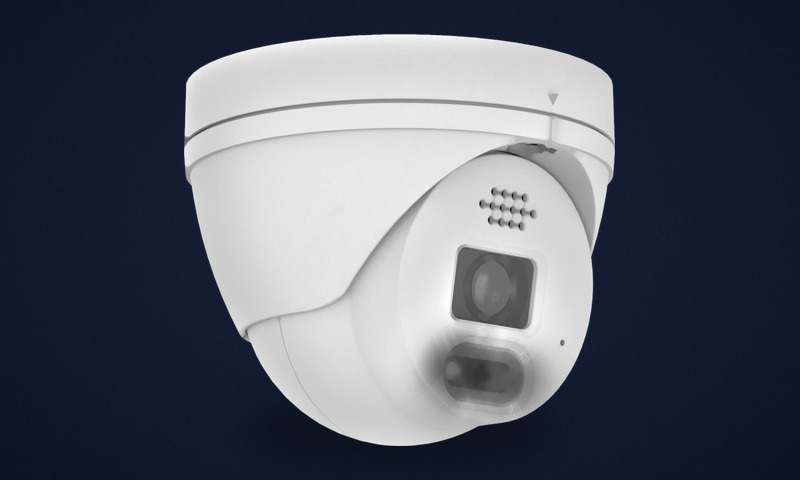
Sometimes called an eyeball camera. The lens sits in an open ball joint with no bubble over it, so infrared light doesn't reflect back off the plastic and wash out the picture at night. You aim it by hand and it stays put.
Best for: most exterior jobs — house walls, entrances, driveways. If you're not sure what you need, it's usually this.
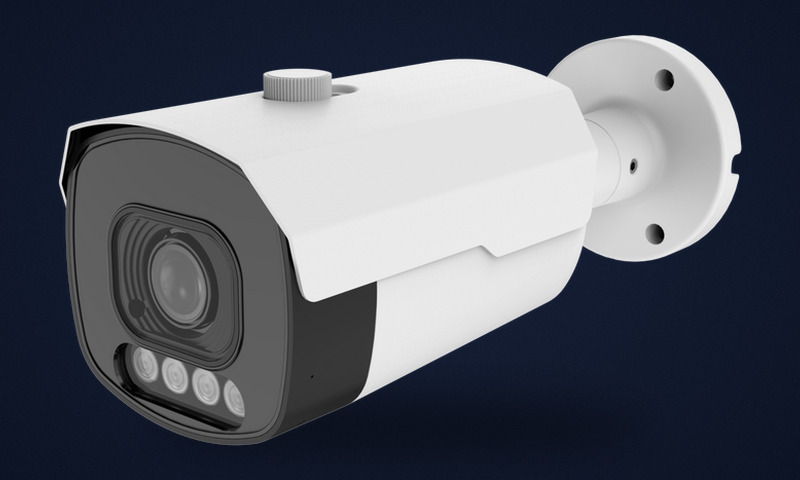
The long cylinder shape everyone recognises as a security camera. That length is functional — it houses a bigger lens, so it reaches much further than a dome or turret. It's also unmistakably a camera, which is the point when you want people to know they're on film.
Best for: long driveways, parking areas, fence lines and yards — anywhere distance is the problem.
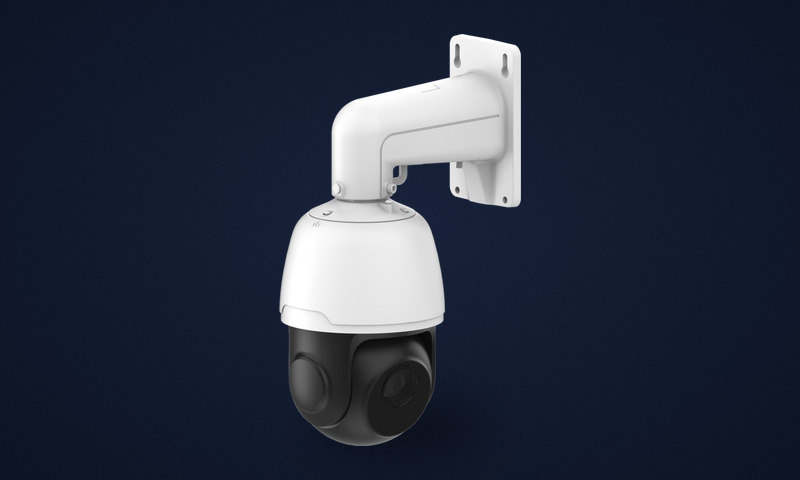
Pan, tilt and zoom — the camera physically moves. It spins a full 360°, tilts up and down, and zooms optically from wide to tight. It can follow a person across a property automatically. The trade-off is simple: while it's looking one way, it isn't watching the other.
Best for: large yards, commercial lots, farms and sites where one camera has to cover open ground.
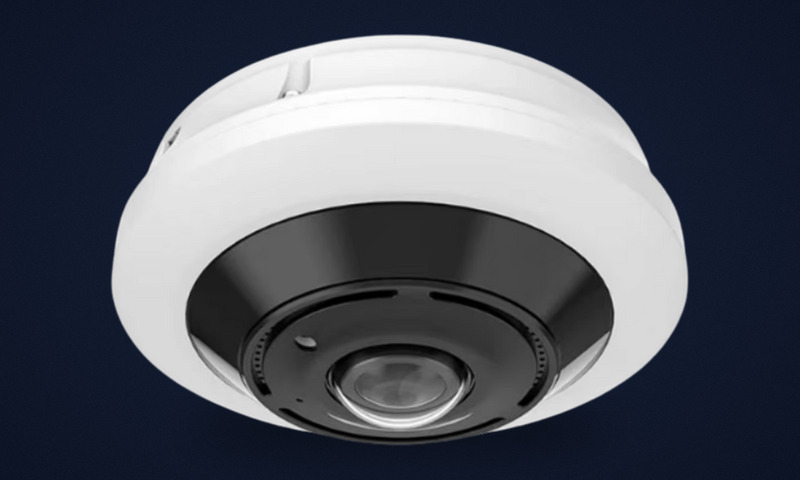
A single ultra-wide lens that captures a complete 360° circle from one mounting point — or 180° against a wall. The raw image looks curved, so the software flattens it into normal-looking views, and you can pull several separate views out of the one camera at the same time.
Best for: shop floors, open-plan offices, warehouse aisles and lobbies — replacing three or four cameras with one.
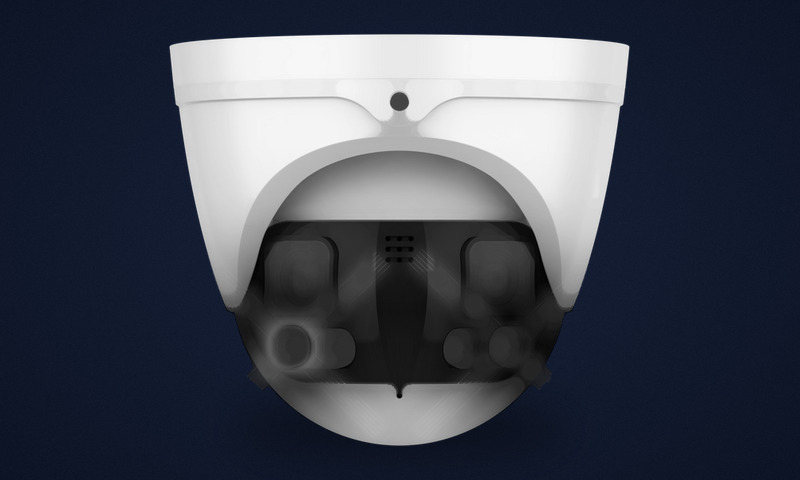
Two separate lenses in a single housing. Usually one wide lens for the overall scene and one zoomed lens for detail — or two wide lenses stitched together into a seamless 180° panorama. One cable, one mount, one recorder channel, twice the coverage.
Best for: corners of buildings, wide driveways, and covering two directions from one mounting point.
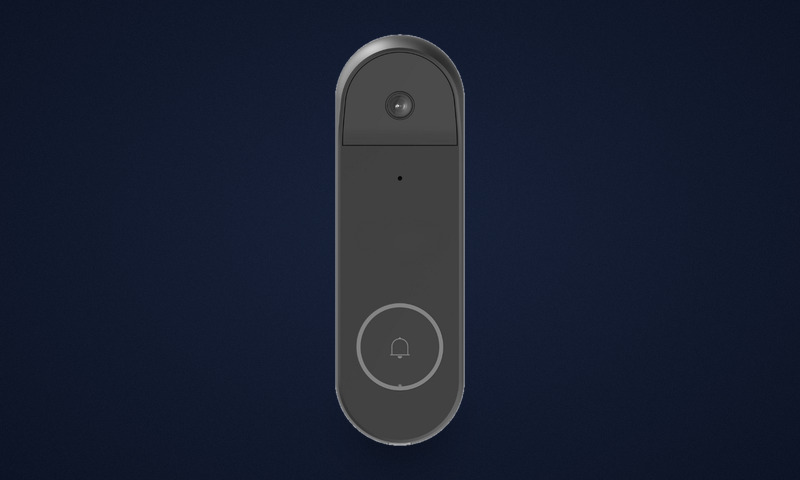
A camera, microphone, speaker and doorbell in one unit at your front door. See and speak to whoever's there from anywhere. We hardwire them into the existing chime so you're not replacing batteries every few months.
Best for: every home. Deliveries, visitors, and seeing who's there before you open the door.
The short version, if you just want to point at one.
| Type | Best for | Range | Field of view | Discreet? |
|---|---|---|---|---|
| Dome | Indoors, public areas | Short to medium | Hidden inside dome | High |
| Turret | General use, most exteriors | Short to medium | Fixed, aimed by hand | Medium |
| Bullet | Driveways, perimeters | Long | Fixed, aimed by hand | Low |
| PTZ | Large open areas | Very long | 360° motorised, 5x–37x zoom | Low |
| Fisheye | Shop floors, lobbies, aisles | Short, very wide | 360° ceiling / 180° wall | High |
| Dual-lens | Corners, wide driveways | Wide + zoom together | Up to 180° stitched | Medium |
| Video doorbell | Front door, deliveries | Short | Fixed wide | Medium |
Swipe the table sideways to see every column.
The difference between a camera that records and a camera that works for you. These features exist on the systems we install — but only if they're set up properly, which is most of the job.
The camera reads plates on moving vehicles and logs them — so instead of scrubbing through hours of footage, you search a plate number and jump straight to every time that vehicle came or went.
This is the feature people most often assume any camera can do. It can't. A general-purpose camera pointed at a gate gives you a white blur where the plate should be, because plates are retroreflective and vehicles are moving. LPR needs its own camera, set up specifically for the job.
People get sold LPR and end up disappointed because the install was wrong, not the camera. Four things decide whether it reads reliably:
Within roughly 30° of straight-on, horizontally and vertically. Too steep and the plate distorts past reading.
The camera is focused on one specific spot in the lane — not the whole driveway. Vehicles must pass through that spot.
Set to freeze motion rather than expose for the scene. This is why an LPR camera looks dark on general footage — it's doing a different job.
You still want a normal camera covering the same area for context. LPR reads the plate; the overview camera shows you the vehicle and driver.
A fisheye or dual-lens camera covers a full 180° from a single mounting point — the whole front of a building, or a complete room, with no blind spot at either edge and only one cable to run.
Optical zoom moves real glass, so the image stays sharp as it magnifies — unlike digital zoom, which just enlarges pixels. At 37x a PTZ can read detail at the far end of a yard that a fixed camera would render as a smudge.
The camera recognises a human face in frame, captures a clear still of it, and indexes it. You can then search recorded footage by person instead of scrolling through hours of timeline.
Draw a boundary or zone on the image. The camera alerts only when someone actually crosses into it — so pedestrians on the sidewalk outside your fence don't set your phone off all day.
A microphone and speaker in the camera. Speak through it from your phone from anywhere — tell a courier where to leave a parcel, or tell someone in your yard at 2am that you can see them.
Distinguishes people and vehicles from cats, branches and headlights sweeping a wall. This is what stops you switching your alerts off within a week.
Detect a person and the spotlight comes on, a red-and-blue strobe flashes and a siren or recorded voice plays. It intervenes rather than just documenting.
Keeps colour in near-darkness instead of the usual black-and-white infrared. The difference between "a person" and "a person in a red jacket."
On a PTZ, the camera locks onto movement and follows it across the property, then returns to its home position once the scene clears.
A specific alert when a parcel is left at, or taken from, your door — separate from general motion alerts.
Search recorded footage by object type, zone or time window. Finding a specific event takes seconds rather than an afternoon.
Live view and playback from your phone anywhere, with alerts pushed as they happen. Set up and demonstrated before we leave site.
Picking a type is the easy part. These are the things that make the difference between footage you can use and footage you can't.
That's normal — most people aren't meant to know the difference between a varifocal bullet and a fixed turret. Tell us what you want covered and we'll spec it, explain why, and put it in writing.
We'll also tell you when you don't need the expensive option. A 4K camera on a small porch is money you didn't have to spend.
We're not tied to one manufacturer — we fit what suits the job and the budget, and we'll tell you honestly what the difference is.
A dome sits behind a clear bubble, which can bounce the camera's own infrared back and cause night glare. A turret has an open lens, so night images are usually cleaner. Domes are harder to knock out of alignment, which is why they stay popular in public areas.
One ultra-wide lens covering a full 360° circle from a ceiling, or 180° from a wall. The curved image is flattened by software into normal-looking views, and you can pull several views from the single camera at once — often replacing three or four fixed cameras.
Two lenses in one housing. Either one wide plus one zoomed, or two wide lenses stitched into a seamless 180° panorama. Covers two directions from a single mount, on one cable and one recorder channel.
Short driveway: a turret or bullet is plenty. Long driveway: put a camera at the gate itself, or use a varifocal or PTZ — a standard wide lens will only give you a distant shape.
It helps when you need faces or plates at distance, or want to zoom into recorded footage. For a small yard at close range, 4MP is often enough and fills the drive far more slowly. We size it to the distance you're actually covering.
The camera reacts instead of just recording — spotlight on, strobe flashing, siren or a spoken warning. It stops a lot of opportunistic activity before anything happens.
Only one set up specifically for it. LPR needs a dedicated camera on a fixed capture point, near straight-on, with a fast shutter. A normal camera aimed at a gate gives you a white blur — plates are reflective and vehicles are moving. Done right, you get a searchable log and the gate can open itself for known vehicles.
Yes. Infrared gives black-and-white in total darkness. Full-colour night vision uses a low-light sensor and a soft spotlight to keep colour — which matters when the detail you need is the colour of a jacket or a car.
We fit wired wherever it's practical. Wireless cameras drop frames, fill up batteries and depend on Wi-Fi reaching the far corner of the property. Wired keeps recording whether or not the internet is up.
Free quote, honest advice, and no upselling you into cameras you don't need.